.svg)

Mental health issues have become more prevalent however, accessing mental health support that is timely and effective is still a challenge. Despite the effective prevention and treatment options that exist, many people with mental health conditions do not have access to adequate care. Discrimination and stigma may also prevent others from seeking help.
The main goal of the app is to help users build emotional awareness by tracking their daily moods and spotting patterns over time. It encourages self-reflection and offers guidance to support mental well-being and personal growth.
.svg)
The main analysis I made was that even through the increasing prevalence of mental health issues in today's society, access to timely and effective mental health solutions is still a great challenge to many. The majority of those who need mental health care worldwide lack access to high-quality mental health services. Other challenges that contribute to lack of mental health support for majority of people include stigma, lack of awareness, financial barriers, limited resources, and cultural factors.


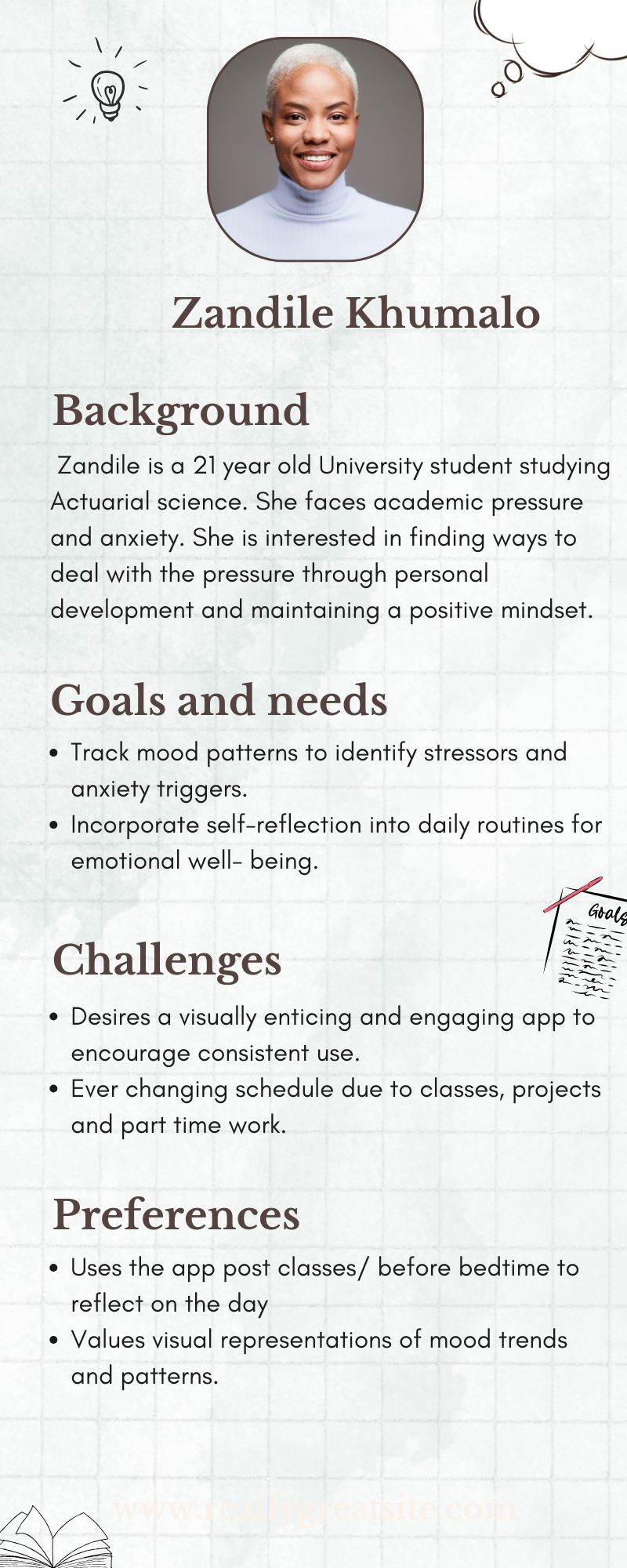
The app is designed for individuals who want to keep track of their moods and increase their emotional awareness. The app is also designed to help individuals improve their emotional and overall well being. Below I put together the user personas for our app.


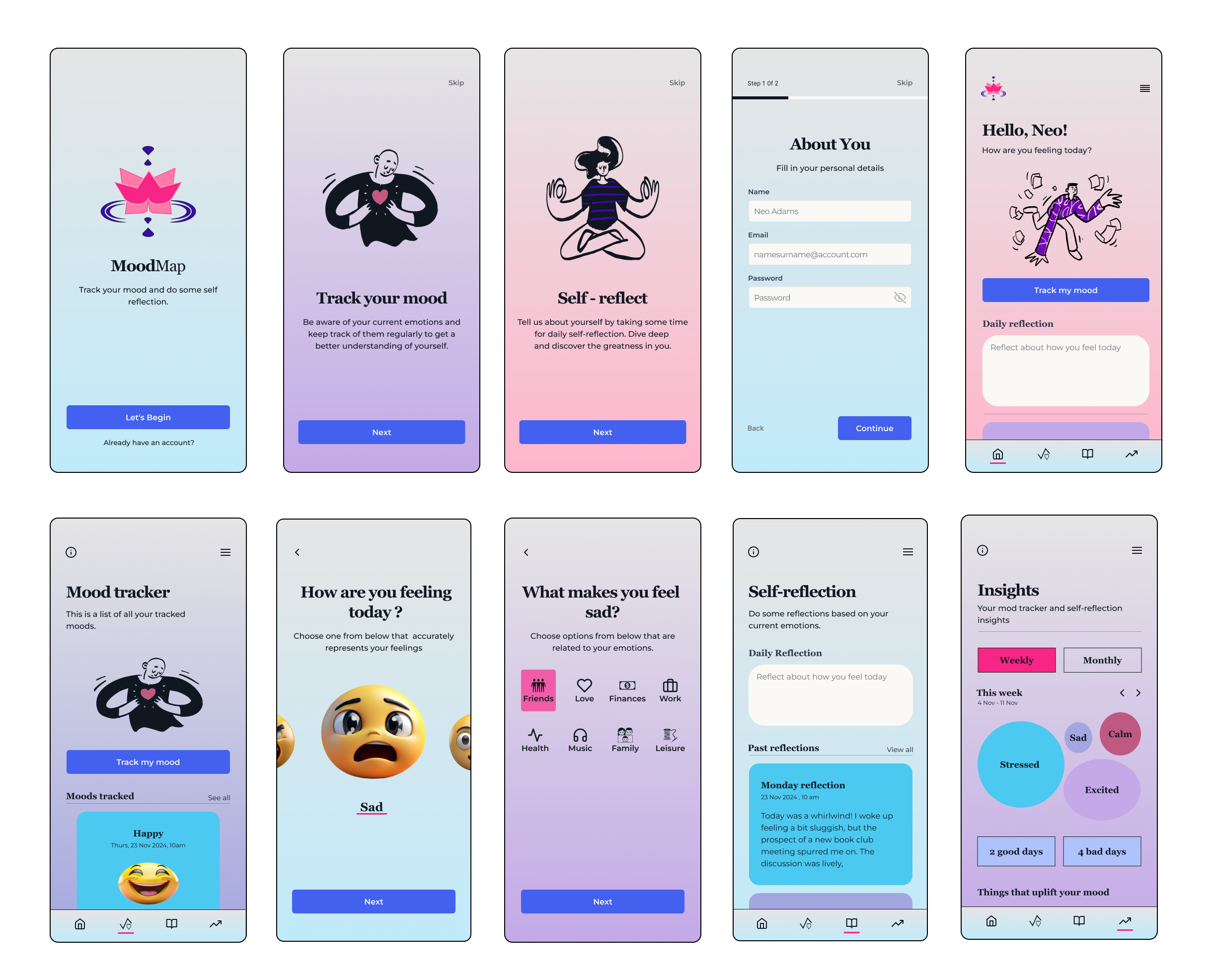
The MoodMap app's purpose is to a provide a mood tracking and self reflection platform for individuals. The app provides a convenient and accessible mental health support platform, where users can track their daily moods, identify patterns over time, and gain a deeper understanding as well as insight into their emotional well being. The app also offers features for self reflection and offers recommendations and guidance based on the mood data, thus helping users achieve emotional growth and wellbeing.



The logo for the app is designed using a combination of two mindfullness symbols namely; the lotus and the symbol for the idea of being here. The lotus flower symbolises strength and resilience, rebirth, self realisation and the overall sense of overcoming adversity. It can also be seen as a symbol for the connection to the universe and each individual’s environment. The symbol for the idea of being here symbolises tranquility, the present, awareness and stillness.

The color palette was chosen to evoke calm, balance, and emotional support—qualities essential for a mental health app. The mix of soothing blues, warm pinks, and deep purples creates a supportive and approachable visual tone.
The typography plays a very crucial role in shaping the user experience which is why I chose the 2 font families, Montserrat and Georgia for the app. The font pair of Georgia and Montserrat can create a simple, elegant and feminine feeling - the feminine feeling can invoke feelings of trust in users. This font pair has an elegance that makes it easy to ready making it accessible to a wide range of users.

.png)


.svg)
.svg)
.svg)
The usability test confirmed that MoodMap creates a welcoming and non-intimidating environment for emotional check-ins. With small enhancements in guidance, personalisation, and visual feedback, the app can better support users on their mental wellness journey; making reflection and emotional growth more accessible and empowering.
I did the following iterations based on user feedback:
.png)

Based on usability insights and user feedback, I was able to outline key future improvements that could enhance the overall experience. These recommendations not only address current usability pain points but also help shape the long term growth and scalability of the product, by aligning user needs and business goals.
